
My Multicultural Experience
by Katelyn Chang
Growing up, I had very different life experiences from most of my other peers. As I lived in a predominantly Hispanic community, my surname stuck out like a sore thumb. My last name is Chang. My great grandfather was Chinese, and immigrated to El Salvador in the early twentieth century. Even though I have mostly Hispanic ancestry, my Chinese heritage has played a large role in my life.
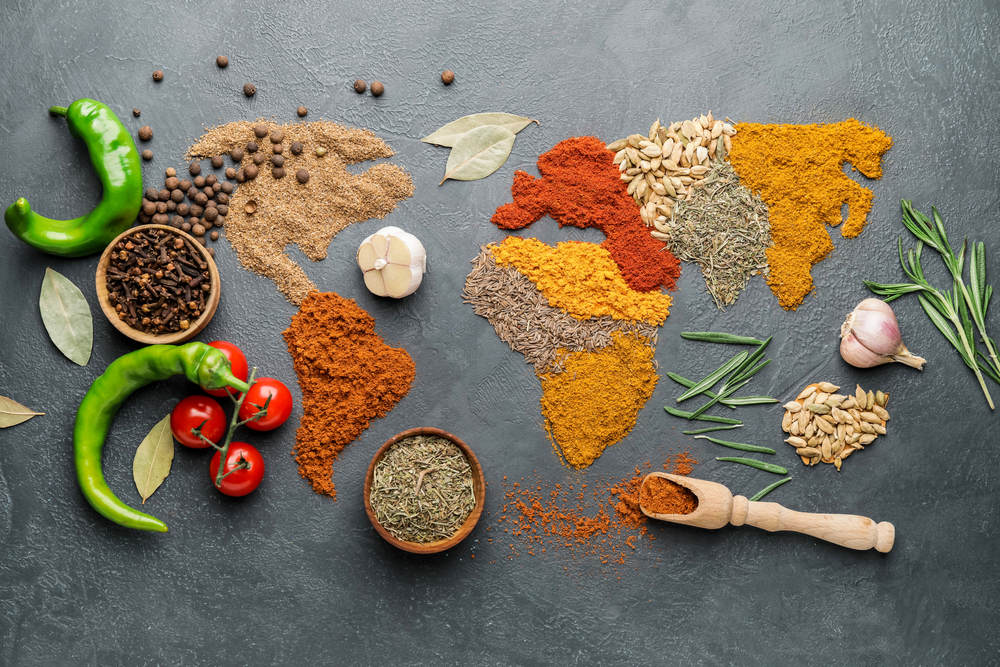
On my mother’s side of the family, my grandparents immigrated from Mexico. I was fully immersed in Mexican culture; on Thanksgiving, while we still had the traditional dishes such as turkey and cranberry sauce, we also indulged in tamales. For Christmas, my grandparents frequently made pozole and menudo. Not only was I exposed to many Mexican dishes, but I travel to Mexico about twice a year.
On my father’s side, we celebrate both Salvadoran and Chinese traditions. For celebrations, we frequently eat pupusas, and know much about the history of El Salvador. We also celebrate Chinese New Year. My grandparents both knew how to make Chinese dishes, and at some Chinese restaurants, the waiters became our friends because we dine there frequently.
Being exposed to so many cultures has allowed me to be knowledgeable about the world and have a craving to learn more. I was deeply immersed in Mexican, Salvadoran, and Chinese culture, and will continue to practice these traditions. While it is not easy being a woman of color, I fully embrace my background, and I wouldn’t change it for the world.
Armenian History Month
by Mariam Nahapetyan, B.S.W., M.P.A., Eastern European/Middle Eastern UsCC and Cultural Competency Committee
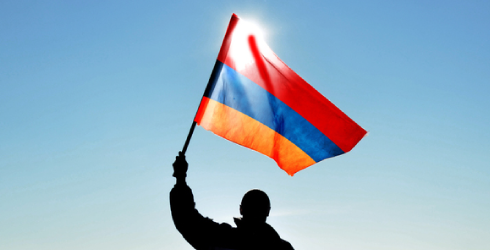
On March 27, 2022, the Los Angeles County Supervisors Kathryn Barger and Janice Hahn co-authored a motion, unanimously approved by the Board of Supervisors, to proclaim the month of April as Armenian History Month.
In the words of Supervisor Barger, “Los Angeles County is home to the greatest number of Armenians outside of Armenia.” While it is vital that we commemorate the Armenian Genocide each year, we must also celebrate the continual contributions of this vibrant community who deeply impact Los Angeles County’s culture, economy, government, and arts.”
Even though Armenians have been subjected to multiple genocides and ethnic cleansings by their neighboring countries for centuries, and undergone to ongoing complex traumas, they continue to survive and thrive. They continue finding ways to be resilient and heal from complex traumas and Post Traumatic Stress Disorders.
On April 7, 2022, the Department of Mental Health had its 4th Annual Armenian Transgenerational Effects on Trauma and Healing Event, where the department, with the help of Armenian Therapists and esteemed community members, and business owners, provided educational information about Armenian complex trauma, resiliency, and healing. We shared the Armenian culture through songs and dances. Since April 7 is considered Mother’s Day in Armenia we are wishing all the beautiful mothers happy Armenian Mother’s Day.
LACDMH’s Speakers Bureau Celebrates Its Second Anniversary
by Dr. Sandra T. Chang, ARDI Division — Cultural Competency Unit Manager
April is “Celebrate Diversity Month”. Some of us would call this “destiny”, some “coincidence”, others “pure luck”… regardless, it happened as if intentionally planned: the LACDMH Speakers Bureau celebrates its anniversary of implementation in the month of April. A special anniversary celebration was hosted on April 7th by Dr. Jorge Partida Del Toro and Dr. Sandra Chang, Speakers Bureau co-directors, to recognize the membership and honor all Speaker Bureau accomplishments over its two years of operation. Members received awards of recognition for their sustained and selfless commitment to serving our underserved communities. In-person and virtual event participants had the opportunity to hear from two dynamic panels featuring Speakers Bureau members sharing their experiences as media experts representing our Department and the internal support that expert members of the Chinese culture created within the Speakers Bureau.
Many are the accomplishments of the Speaker Bureau, which operates under LACDMH’s Antiracism, Diversity and Inclusion (ARDI) Division. Over the last two years, multiple Los Angeles County Board Offices, K-12 schools and institutions of higher learning, community and faith-based organizations, professional associations, and other governmental agencies across all eight Service Areas, the State and the country have benefited from the expertise of the Speakers Bureau. Members of the Speakers Bureau engage in a variety of internal and public-facing speaking engagements that address the clinical, cultural and linguistic mental health needs of L.A. County communities where they live and serve. read more…
A true love story and redemption / Una historia de amor y redencion

by Reverend Christian Ponciano B.Th. MBC, LACDMH Faith-Based Advocacy Council Chair
(Ed. Note: The Spanish edition of this article will appear below.)
In addition to being an annual tradition celebrated in distinctive ways by most part of Christianity, Holy Week is a story of love and redemption, having its theological roots in the four Gospels of Matthew, Mark, Luke, and John where they tell the same story from different perspectives being the same gospel. Jesus’ triumphal entry into Jerusalem, known as Palm Sunday, His suffering (passion), sacrificial death, and resurrection. Each of these events was foretold centuries before they happened by Moses, the prophets, and the psalms in the Old Testament. Their fulfillment had their reason for being for the benefit of all humanity before and after Christ. Let us consider the blessings of this tradition. read more…
Wondering How (I Could Be Me)
by Pierre Chambers, Community Health Worker
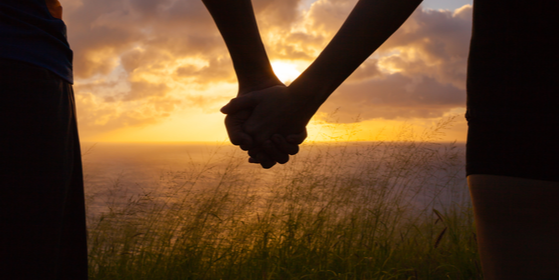
I find myself wondering
how it happened.
that I found pride
in whom I am,
joy in what I do,
and how I do it.
Coming from such ugliness
growing up gay,
being nothing to
family
church
and community.
I find myself wondering
how I learned to love me.
no one told me
that I was beautiful,
as I am.
I grew up wanting to be something
other than what I was,
just be like everybody else,
not be different.
Something I can see
in the mirror and smile at,
there were no examples,
revealing to me how to be.
No one to talk with
speaking truth into what I was/am.
I was alone,
and I had to figure
things out by myself.
until a stranger came along
and touched me.
in that special place.
then, I became alive.
I wanted to marry,
was told that that
was the correct thing to do,
the Christian thing to do.
There was no way,
I could marry a man,
so, I had to let go of that want.
I wanted children,
wanted to be a father.
I didn’t want to bring someone
I loved into this ugly world.
having to tell them
later that I was gay.
Yes, your father likes men,
wanted to love them.
I couldn’t suffer that exposure,
couldn’t take that rejection
by someone who said they loved me.
so, I had to refuse myself
that privilege and possible pain.
I wonder how it happened,
that I learned to love me.
couldn’t say it came from God
because they told me God
didn’t love me, and my kind.
Had me believing that lie
from the devil’s tongue they said.
But we all know
it was from man’s fear.
I might, rub off on him.
make him look like me,
make him want me, and then what?
Association might make him
want to come out.
make him want to feel
what he’s been suppressing
in his soul.
Recruit him!
Reveal to him what he’s been hiding,
from himself!
He feared what I was.
How is it,
that I love myself,
who I am,
just me.
By all rights I shouldn’t.
I’m glad I know, it’s alright too!
Never Mind

by José Paul Molina, Youth Community Member
I will sometimes find myself lost in a conversation with a hearing person over a word or sentence they say, so I would automatically ask them to repeat themselves. Dismayingly, they will utter one of my least favorite phrases as a deaf person with a cochlear implant (CI), “never mind.” Occasionally, they will say “I’ll tell you later,” which is even worse because they never do. When you are verbally engaging with deaf people like me, please remember that patience is key. Try not to express any frustration when we do not understand because that further excludes us. Please be mindful that it can be very painful for us to be confused and get left out of conversations despite our full attention just because we cannot hear them clearly. There can be numerous reasons why I, personally, cannot fully hear, such as noisy, crowded environments, heavy accents, fast speakers, or even face masks made common by COVID-19.
Some people, especially my family, will ask how come I cannot hear them since I have my CI. For that, I will say that while CI is an awesome piece of technology, it is not a miraculous cure for deafness. I am deaf without CI, I am still deaf with it, and I will never be able to hold up to abled standards. In fact, after 18 years of CI, I can only hear 80% of what is going on around me and that is only in quiet spaces, though the percentage varies for other CI users. It is, therefore, up to me to fill out the gap by relying on social cues and context, lip-reading, and pure luck, especially with less than ideal speakers and environments. So, next time we ask you to repeat what you said, I hope that you will be accommodating without any annoyance by facing toward us and allowing yourself to repeat or rephrase the statement at least once, or write it down. It only takes 5 to 10 seconds, but it is one of the great ways to develop an inclusive space for deaf people to thrive in a hearing world.
March Message from DMH-ARDI
Our department’s Anti-Racism, Diversity, and Inclusion (DMH-ARDI) Division is raising awareness and appreciation for multiple, month-long commemorations taking place this and next month.
We encourage you to check out the below articles on our Cultural Traditions & Connections space to engage with some of the cultural awareness themes observed in March.
Please also take a few minutes and join us in lifting up our collective voices by supporting, learning from, and celebrating these cultures and communities being recognized this month: read more…
Leaving Behind A Good Example / Dejando Un buen Ejemplo
Waldemar Orozco
10/7/1943 – 1/25/2022
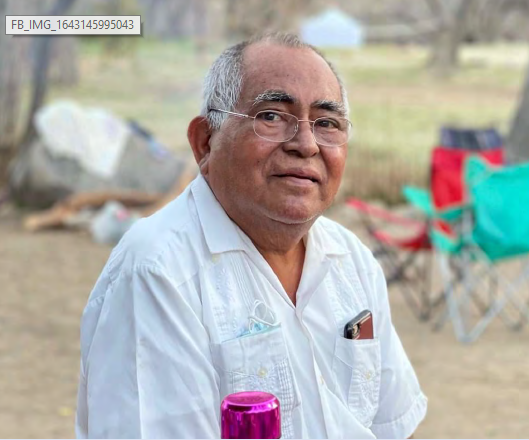
by Elizabeth Gomez, Service area 7 promoter / Promotora de la área de servicio 7
Mr. Waldemar Orozco was originally from Puerto San Jose Guatemala, and he began his career as a Mental Health Promoter in 2011. He participated in the Promoter training and began providing workshops for the LA County Department of Mental health.
Waldemar facilitated presentations in various community settings including schools, parks, senior centers, and churches. He provided workshop participants with knowledge and the message that there are no limitations in life or obstacles that can’t be overcome. He was the best example of this philosophy after having suffered a stroke in 2011 and having to learn how to eat, speak, walk, and write with his left hand.
Waldemar was a Promoter that was dedicated to his work as he approached it with love. All his workshops were different, personalized, and unique. He had a gift at connecting with participants that conveyed trust. He was humble, punctual, respectful, and wise and loved his work. read more…
Native American Gatherings
by Bernice Mascher, co-chair of LACDMH’s Cultural Competency Committee

LACDMH Staff & Community Members celebrate Native American culture with a dance at our Peer Resource Center, 2019
Like so many events in the last two years, COVID-19 canceled most events in the Native American community as well. This includes many of the annual Native American Pow Wows and annual gatherings. Pow Wows occur across the North American continent, as one of the ways the Native American community gets together to renew friendships and build relationship. It’s a time of celebration and renewal as cultural foods are enjoyed (i.e. frybread, Indian tacos), authentic crafts are sold, and the arena brings together dancers, singers, and traditional honorings of many kinds. This is a great way to find community members, and a wonderful way to participate and learn more about the Native American culture. It is also a relaxing way to spend a day.
If you want to learn more about Pow Wows, or if you want to pencil in a visit to an upcoming event, check out https://www.powwows.com. They keep an updated calendar of most events, and they offer plenty of information about Pow Wows for anyone attending for the first time. There are many “community” Pow Wows (often held at schools and parks) as well as large competition Pow Wows (held by most Casinos and Tribes in the surrounding areas and of Southern California). Each event has its own unique sense of atmosphere and excitement, and various activities and a number of vendors. These events are all open to the public, but be aware there are some “rules” and ways to show respect. Don’t be afraid to ask questions once you are there. Also listen closely to the MC giving the announcements in the arena, which will let you know what is going on, including when you can join the dancers in the arena (during “Inter-tribals” only). Be careful with photos. If you want to take a close-up photo of a dancer, ask! Also, do not take photos during the competitions. The MC will let you know ways in which you can participate, and most attendees are very open to have a conversation with you if you are truly interested to learn.
If you have never been to a Pow Wow, or if it’s been a long time since you enjoyed some of the foods or connected with friends, or you just want to experience some of the uniqueness of the Native American culture, here are three near-by opportunities to be involved in the month of April and May: read more…
Celebrating Sexual and Gender Diversity in March
by Rebecca Gitlin, Ph.D. (she/her), Clinical Psychologist & LGBTQ+ Services Specialist
 March is an important month for celebrating sexual and gender diversity. Many of us are already aware of Women’s History Month. March is also regarded as Gender Equality Month, which serves as a call to celebrate the history, contributions, and wellness of community members who are impacted by gender-based bias and oppression. We honor and uplift the livelihoods of all femmes, transgender and non-binary people, and women and girls this month and year-round.
March is also Bisexual+ Health Awareness Month. While overall health-related inequities among lesbian, gay, bisexual, transgender, queer, intersex, asexual, and Two-Spirit (LGBTQIA2-S) communities are fairly well known, bisexual+ individuals (including those who are bisexual, pansexual, queer, and/or fluid) experience particularly elevated disparities in health outcomes and social determinants. This is related to the invisibility and/or dismissal of bisexual+ identities and lived experience within many communities and spaces in our society, including within healthcare institutions. The theme of Bisexual+ Health Awareness Month 2022 is Connection, which emphasizes the importance of bisexual+ community members’ connecting with each other and with affirming healthcare services.
March 21-25 also marks the 20th National LGBTQ Health Awareness Week. This year’s theme is Live Out Loud for LGBTQ Health and encourages all of us to speak openly about LGBTQIA2-S health, barriers and gaps within our system of care, and community strengths that elevate the wellbeing and beauty of a sexually and gender diverse Los Angeles County.
Finally, March 31 is International Transgender Day of Visibility. Founded in 2009 by Michigan-based transgender activist Rachel Crandall, Transgender Day of Visibility (TDOV) uplifts the livelihood, resilience, and accomplishments of transgender people. TDOV also serves as a call to action to take the necessary steps to foster a safe and affirming world for people of all gender identities. When we celebrate the existence and survival of transgender, gender non-conforming, and intersex (TGI) people, we collectively recognize community members who are often dismissed or rejected. In doing so, we aim to reduce stigma, offer hope, and raise awareness about the lived experiences of TGI people.
As we honor the visibility and awareness of LGBTQIA2-S communities this month, we must also acknowledge that it is not safe for many people to live openly as their authentic selves. Indeed, visibility can be associated with increased vulnerability for many, as community members experience discrimination, harassment, and violence in response to their actual or perceived sexual and/or gender identity. BIPOC transgender women and gender nonconforming people, in particular, are disproportionately targeted in acts of anti-transgender hate and violence.
We know that affirming a person’s authentic identities is itself an effective healing practice that can reduce health disparities and promote community wellbeing. This month and all year, we invite you to join us in transforming our society and healthcare institutions into more welcoming, diverse, and equitable spaces for everyone.
Blog Search
About This Blog
The project has its roots in the Cultural Competency Committee’s “Share your Culture” initiative introduced by Co-Chairs, Mr. Sunnie Whipple and Ms. Bernice Mascher. This initiative engaged community members, consumers, family members, peers and staff alike in presenting on different aspects of their culture; thereby fostering cross-cultural learning, understanding, sensitivity, and appreciation.
The Cultural Traditions and Connections Blog came out of the need to connect with our committee members, inclusive of consumers, family members, peers, advocates, community members, colleagues and co-workers. It was fueled by the need to tell everyone that we care about what is happening within our families, our neighborhoods, our communities, our country, and our world.
We can all share and find nurturing connections by engaging in reading heartwarming articles and reflections that help us relax our tired minds, draw smiles across our faces, and comfort our spirits with a sense of collective caring found in the richness of who we are as human beings.
This blog’s content is managed by the members and staff of the Cultural Competency Committee.