
Untitled Poem
by Youth Community Member Aisha Ketani
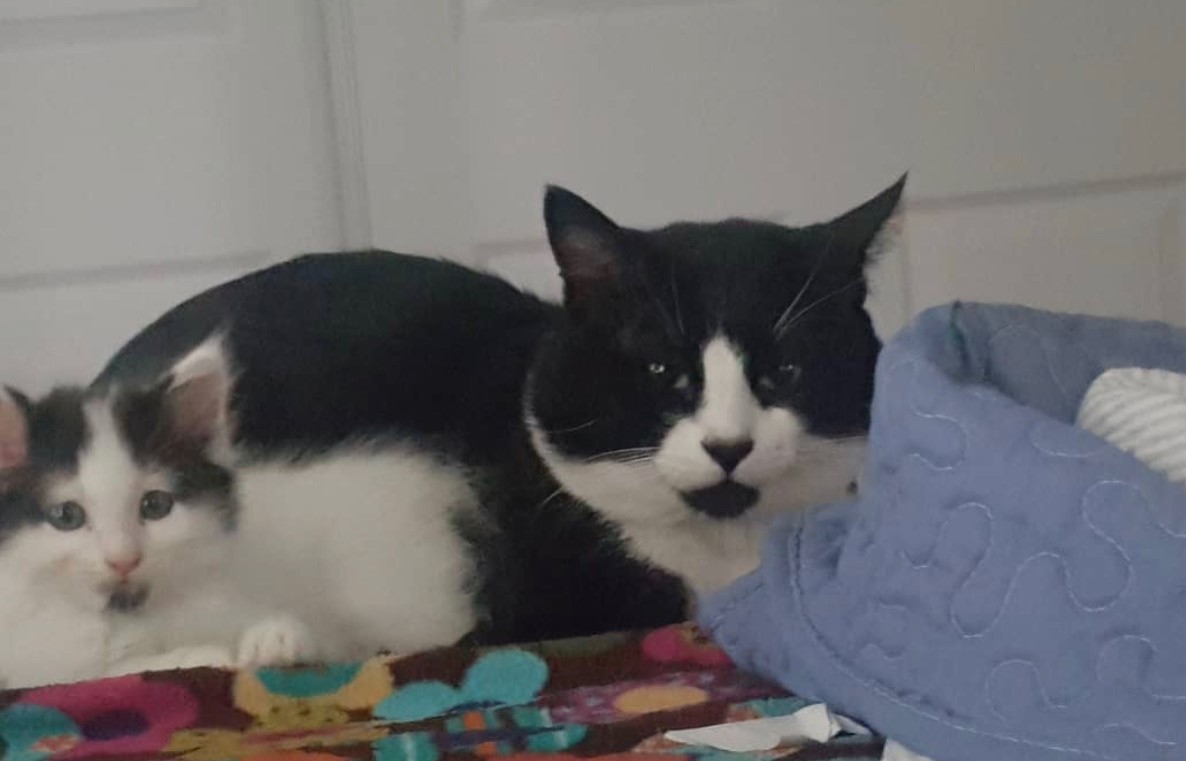
Black.
White.
I am grateful for these colors
Because they are the colors of my cats
my cats who swing their bats
as they go into combat.
Ah I love my cats
Gratitude starts with my cats.
The Evolution of Juneteenth
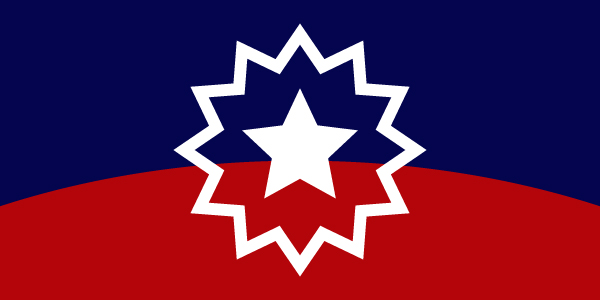
Juneteenth flag designed by Ben Haith (“Boston Ben”) & refined by L.J. Graf; learn more about this flag’s symbolism here.
By James Coomes, LCSW, Olive View Program Manager and DMH-ARDI Staff Advisory Council member
I wanted to share with you a little bit about Juneteenth, which was recently celebrated on June 19th, 2022, the second year that it is officially recognized as a Federal holiday in our nation’s history. Juneteenth was established on June 19th, 1865 in Galveston, Texas, when Union General Gordon Granger and his troops arrived at the end of the civil war. The civil war had ended two months prior and the emancipation proclamation had been signed two years prior. It took this amount of time for Union soldiers to reach Galveston Texas and inform those enslaved on plantations that they were now free. It is my understanding that three days of celebration erupted and included food, dance, music, culture, and family.
I’ve been celebrating Juneteenth for the last 15 years myself. I go to a church in Pasadena called Neighborhood Unitarian Universalist Church, and we have been working really hard within the denomination for the past 25 years to address issues of racial equity, justice, and inclusion. It is a liberally religious denomination, but it like a lot of the work we do, struggles with institutionalized structures that have not necessarily been welcoming to all comers. A small group that I’m involved in called Neighborhood People of Color decided we wanted to have a Juneteenth celebration every year. We spend a Saturday cooking ribs and chicken for the entire congregation and community members. On Sunday we reheat, cook hot links, and invite the community to bring potluck dishes. This has easily become one of my favorite events at my church and it’s become a really important community event for our congregation.
We took this on in part because we wanted to celebrate and enjoy each other’s company and reach out to the larger community, stigma-free, to participate in this national celebration. Over the last three years, Juneteenth is taken on additional significance. We have collectively experienced issues of racial inequality, hostility, and pain in the Black community and in other communities of color. Last year the federal government named Juneteenth a federal holiday, and many labeled it a second Independence Day. Doing this was significant to acknowledge the experience of African Americans, and has lifted up that that despite not having universal acceptance, it is important to acknowledge this history and these struggles and where we are at in American culture. This month, we celebrate Bebe Moore Campbell Minority Mental Health Month. Although Juneteenth happened last month, we wanted to take a few moments to just acknowledge this important day and its important time in America’s ever-evolving history.
My Struggles as an Immigrant
by Mercedes Moreno, LACDMH Cultural Competency Committee Member
I was born in El Salvador, Central America. My mother was a single parent raising five children, four daughters and one son. I was the eldest of the family. From the moment I was born, I never used shoes until I was nine years old. My brother began working and he was the one who bought me my first pair of shoes. We lived in a tin roof home with walls made of palm leaves from coconut trees. In the winter, thunder and lightning would scare me because the strong winds would blow away the palm walls of our home. We would end up drenched and without a home as a result of these relentless storms. I remember the yard would be inundated and it would all turn to mud. There was no drinking water, restroom, or electricity. But I had fun playing in the rain and playing make believe with my friends.
When I was four years old, I was very sick from diarrhea and as a result, my belly grew large, and my legs became swollen. After a stay in the hospital, my legs returned to normal, but my belly stayed enlarged. In first grade, I went to school barefoot, at least until my brother was able to buy me my shoes. When I was ten years old, I was in charge of chores at home while my mother worked. My three older sisters attended school. During this time that I was alone at home, I was sexually abused by a neighbor. As a result, I could no longer attend school during the daytime, I had to attend night school due to the societal norms that looked down upon me for having been raped.
As a teenager my stomach was still large. When I was fifteen years old, I fell in love with an older married man. I had unprotected sex and ended up pregnant. I had no clue how children were born. I thought they were born out of one’s mouth. I ended up leaving my home because I was scared. I did not inform the man I was with about my pregnancy. I went to look for work in the state capital. After my child was born, I returned to my mother’s home and decided to look for the father of my child. He denied that my child was his stating that it had been several months since we had intimate relations. I then filed a petition for him to pay child support, but he never paid a dime. read more…
A Brief History of Our LGBTQIA2-S Pride Flag
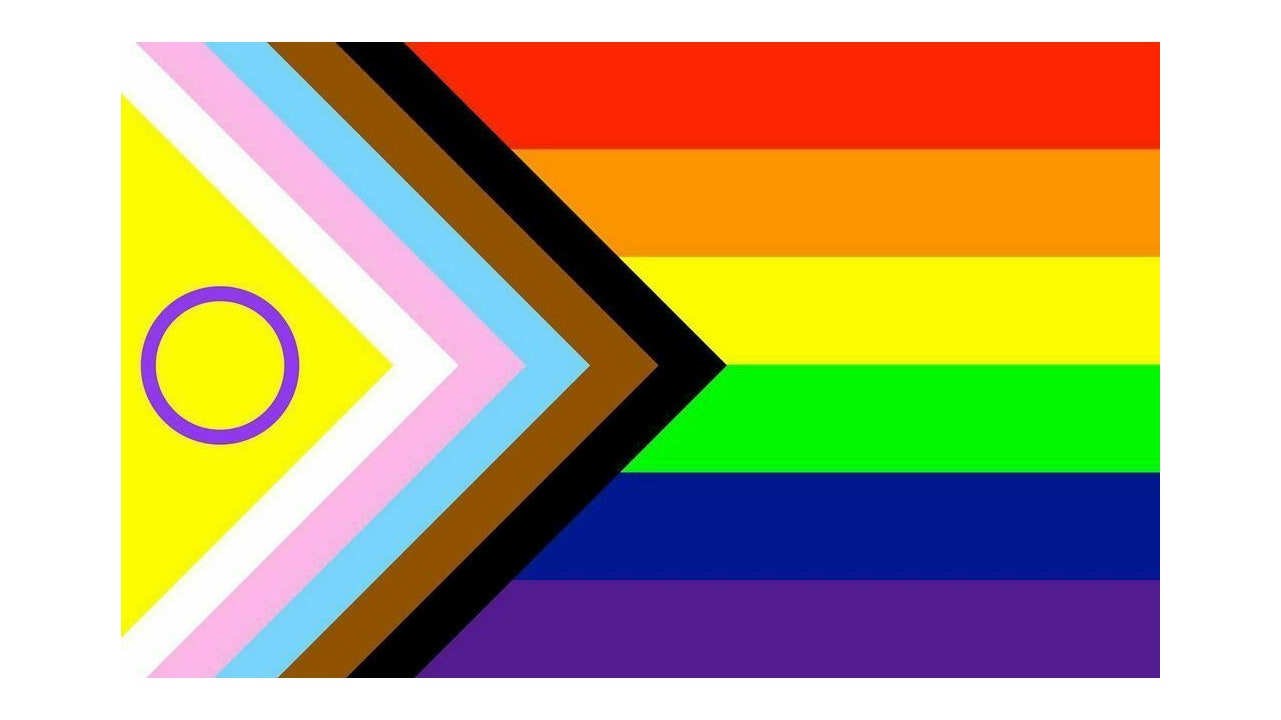
June is Pride Month! You may have seen different kinds of Pride flags at community events and parades, outside people’s homes, on crosswalks, and even raised over Capitol buildings throughout the country. Flags are sociopolitical symbols of community membership, unity, and visibility. Over the years, the Pride flag has evolved to promote greater inclusion and recognize the many communities that celebrate Pride. Read on to find out about the history behind this imagery.
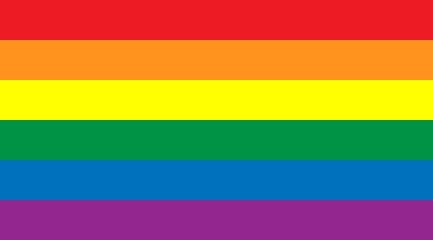
You may be familiar with the rainbow-striped Pride flag. In recent years, this flag has been updated and expanded to represent the intersectional diversity of lesbian, gay, bisexual, transgender, queer, intersex, asexual, and Two-Spirit (LGBTQIA2-S) communities.
Before rainbow-striped Pride flag, many LGBTQIA2-S communities used a pink triangle as visual representation. This was adapted from badge that gay prisoners were forced to wear in Nazi concentration camps. Perhaps the most well-known usage of the pink triangle symbol was by ACT-UP during the height of the HIV/AIDS epidemic. Other symbols used by LGBTQIA2-S groups include green carnations, purple hand prints, Greek symbol lambda, blue feathers, and ace playing cards. read more…
About Pride Month
by Rebecca Gitlin, Ph.D., Clinical Psychologist and LGBTQ+ Services Specialist
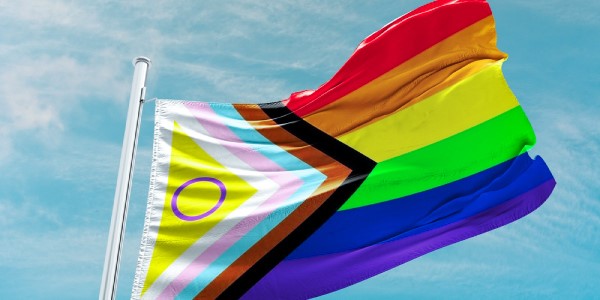
June is Pride Month, which is a time to uplift and celebrate sexual and gender diversity in our communities. For many lesbian, gay, bisexual, transgender, queer, questioning, intersex, asexual, Two-Spirit (LGBTQIA2-S), and other sexually and gender diverse individuals, Pride Month is a reminder of the importance of visibility, community, and acceptance. This month also represents political resistance for many LGBTQIA2-S community members, as we continue working toward a society that is free from discrimination, bias, and victimization toward diverse genders and sexualities.
Pride Month commemorates the 1969 Stonewall Uprising, which took place in New York City. At the time, police harassment toward LGBTQIA2-S community members – drag queens, sex workers, and transgender and gender non-conforming people in particular – was not uncommon. LGBTQIA2-S bars and other gathering spaces were often at risk for police raids and mass arrests. On June 28, 1969, patrons at the Stonewall Inn responded to a police raid with resistance, leading to five days of protest and other political action. The Stonewall Uprising is credited for spearheading the Gay Liberation Movement, which ultimately led to modern-day LGBTQIA2-S liberation movements.
Less known, however, are previous acts of resistance against police violence by LGBTQIA2-S communities in California. In May 1959, patrons at Cooper Do-nuts, a popular hangout for LGBTQIA2-S communities on Main Street in downtown LA, responded to police harassment with resistance and public protest. This is sometimes credited as the first uprising by LGBTQIA2-S communities in the United States. In San Francisco, an uprising occurred in response to police harassment of transgender patrons at Compton’s Cafeteria in August 1966. Just a few months later, a protest at the Black Cat Tavern (which still stands in Los Angeles’ Silver Lake neighborhood) in response to police harassment and brutality represented one of the first and largest organized public protests for LGBTQIA2-S rights in the country. read more…
Thoughts on Covid
by Guadalupe Aguilar
Each day may seem like the day before. You don’t know which day of the week it is or even what month you are in. It is day 145 since this pandemic invaded our world, or could it be day 500, it felt like it. Some days I wanted to cry (and I did), some days I just laughed and some days I wanted to scream.
My mental health was off the hook the first couple of weeks, I will admit. I found it hard to breathe. And as the days turned into weeks and then months, I closed my eyes and I acknowledged all that I was feeling-anxiety, stress, a bit panicked and scared. And as I processed these feelings, I transported myself to the ocean and in my mind, I could hear the ocean waves, remembering how the sand felt between my toes. In the ups and downs of this pandemic, there were good days and bad days.
It is important to accept what you are feeling, let it go through you, let it OUT. But through it all, ask yourself what is it that is most important to you. For me, it is my family, husband, sons, extended family, close friends, the treasure of memories of loved ones no longer here. read more…
What Works for Me and My Mental Health
By the LACDMH Cultural Competency Committee and Sandra T. Chang, Ph.D., ARDI Division – Cultural Competency Unit
With a strong acknowledgment of “May is Mental Health Month”, the LACDMH Cultural Competency Committee (CCC) took the initiative of sharing their members’ favorite practices to promote personal mental health. All these coping strategies have been bundled as a gift from the committee to all Los Angeles County communities with a very special message:
- Each life matters, our lives and wellbeing matter
- Our physical and mental wellbeing require active acts of kindness coming from ourselves for ourselves
- It is when we take good care of and love ourselves that we can best love and take care of our families, friends, and others around us
“What Works for Us May Work for You” read more…
The 11th Global Accessibility Awareness Day (GAAD) is Coming
by Bernice Mascher, co-chair of LACDMH’s Cultural Competency Committee
Prepare for it, and participate in the many events being offered—past and present.
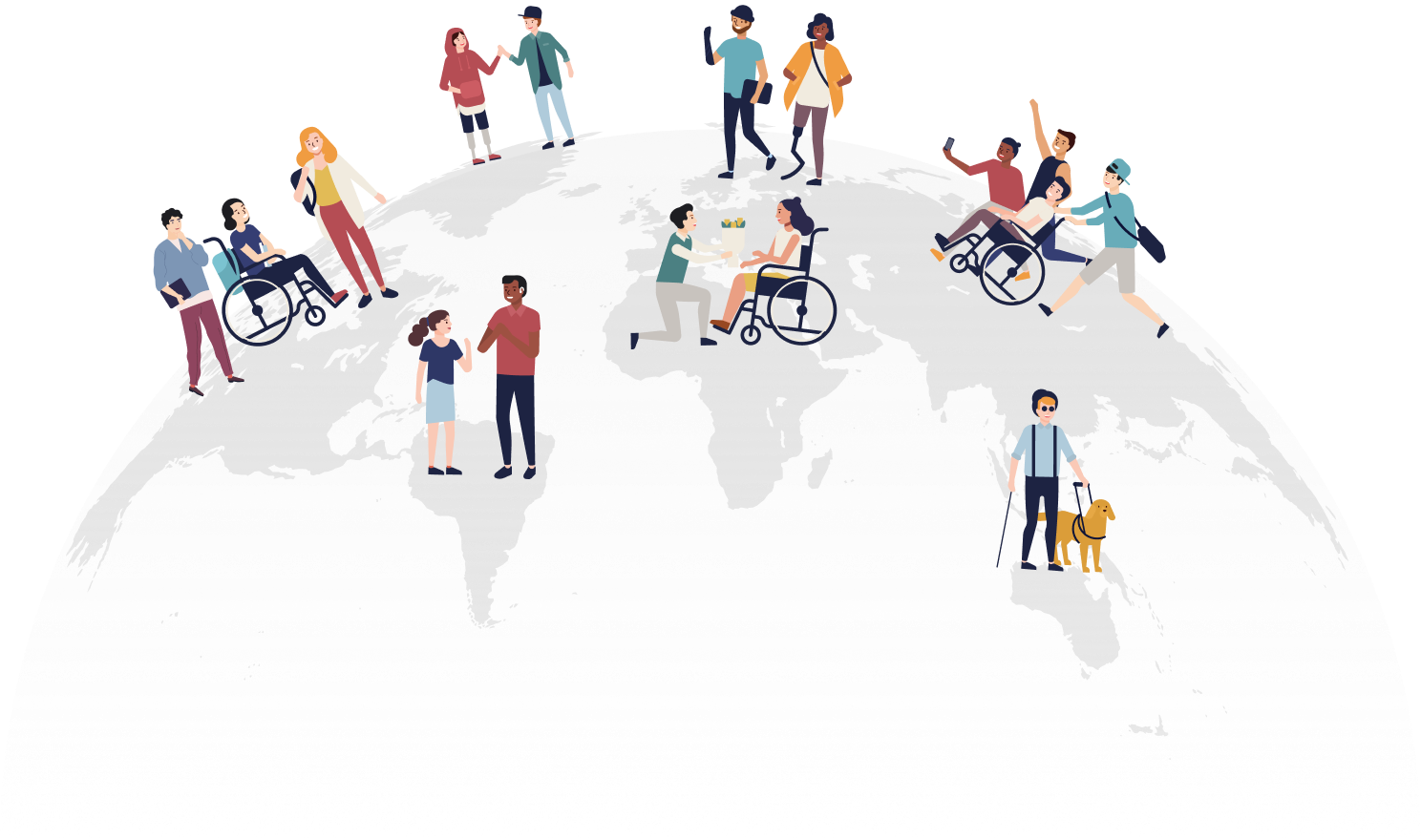
On Thursday, May 19, 2022, GAAD wants to get everyone involved in learning more about digital access and inclusion. In a world that relies heavily on digital technology, even more so since COVID-19 hit, there is still a vast need to improve accessibly in all sectors of society, especially for the one billion people with disabilities or impairments. This annual global event highlights the need to give every user a “first-rate digital experience on the web,” and they invite everyone to join them in finding or submitting an event to experience “first-hand the impact of digital accessibility (or lack thereof).” The ongoing initiatives of the GAAD Foundation (https://gaad.foundation) also invites all organizations to join them in a long-term commitment to improve digital access and inclusion for people with disabilities as a core requirement.
GAAD started back in 2011, with a single blog post by the Los Angeles web-based developer and current Co-Founder, Joe Devon. By chance, Jennison Asuncion, an accessibility professional from Toronto, came across Joe’s blog through a tweet and immediately joined forces with him to work out this idea of a Global Accessibility Day. Today, Jennison is also a Co-Founder of GAAD, and he shares an interview by Dr. Jonathan Hassell about the origin and intent of GAAD on the website here: https://accessibility.day/about/
GAAD demonstrates how digital accessibility continues to be a big challenge, a basic need, and a civil right by people with disabilities, who remain underserved among today’s digital products and output media. Inclusive design and technology can impact their lives, even in the simple use and development of an app, or a document that is accessible, legible and readable by every user. All staff members and community stakeholders in the Department of Mental Health can grow in this area of knowledge as well. GAAD presents an amazing opportunity to learn and experience the challenges and wonders of accessibility, and it is too good to pass by. read more…
My Multicultural Experience
by Katelyn Chang
Growing up, I had very different life experiences from most of my other peers. As I lived in a predominantly Hispanic community, my surname stuck out like a sore thumb. My last name is Chang. My great grandfather was Chinese, and immigrated to El Salvador in the early twentieth century. Even though I have mostly Hispanic ancestry, my Chinese heritage has played a large role in my life.
On my mother’s side of the family, my grandparents immigrated from Mexico. I was fully immersed in Mexican culture; on Thanksgiving, while we still had the traditional dishes such as turkey and cranberry sauce, we also indulged in tamales. For Christmas, my grandparents frequently made pozole and menudo. Not only was I exposed to many Mexican dishes, but I travel to Mexico about twice a year.
On my father’s side, we celebrate both Salvadoran and Chinese traditions. For celebrations, we frequently eat pupusas, and know much about the history of El Salvador. We also celebrate Chinese New Year. My grandparents both knew how to make Chinese dishes, and at some Chinese restaurants, the waiters became our friends because we dine there frequently.
Being exposed to so many cultures has allowed me to be knowledgeable about the world and have a craving to learn more. I was deeply immersed in Mexican, Salvadoran, and Chinese culture, and will continue to practice these traditions. While it is not easy being a woman of color, I fully embrace my background, and I wouldn’t change it for the world.
Armenian History Month

by Mariam Nahapetyan, B.S.W., M.P.A., Eastern European/Middle Eastern UsCC and Cultural Competency Committee
On March 27, 2022, the Los Angeles County Supervisors Kathryn Barger and Janice Hahn co-authored a motion, unanimously approved by the Board of Supervisors, to proclaim the month of April as Armenian History Month.
In the words of Supervisor Barger, “Los Angeles County is home to the greatest number of Armenians outside of Armenia.” While it is vital that we commemorate the Armenian Genocide each year, we must also celebrate the continual contributions of this vibrant community who deeply impact Los Angeles County’s culture, economy, government, and arts.”
Even though Armenians have been subjected to multiple genocides and ethnic cleansings by their neighboring countries for centuries, and undergone to ongoing complex traumas, they continue to survive and thrive. They continue finding ways to be resilient and heal from complex traumas and Post Traumatic Stress Disorders.
On April 7, 2022, the Department of Mental Health had its 4th Annual Armenian Transgenerational Effects on Trauma and Healing Event, where the department, with the help of Armenian Therapists and esteemed community members, and business owners, provided educational information about Armenian complex trauma, resiliency, and healing. We shared the Armenian culture through songs and dances. Since April 7 is considered Mother’s Day in Armenia we are wishing all the beautiful mothers happy Armenian Mother’s Day.
Blog Search
About This Blog
The project has its roots in the Cultural Competency Committee’s “Share your Culture” initiative introduced by Co-Chairs, Mr. Sunnie Whipple and Ms. Bernice Mascher. This initiative engaged community members, consumers, family members, peers and staff alike in presenting on different aspects of their culture; thereby fostering cross-cultural learning, understanding, sensitivity, and appreciation.
The Cultural Traditions and Connections Blog came out of the need to connect with our committee members, inclusive of consumers, family members, peers, advocates, community members, colleagues and co-workers. It was fueled by the need to tell everyone that we care about what is happening within our families, our neighborhoods, our communities, our country, and our world.
We can all share and find nurturing connections by engaging in reading heartwarming articles and reflections that help us relax our tired minds, draw smiles across our faces, and comfort our spirits with a sense of collective caring found in the richness of who we are as human beings.
This blog’s content is managed by the members and staff of the Cultural Competency Committee.